Notes from “Contacting, Translating, Mimicking: Interspecies Tactics,” a panel at Untameable Futures (u+, 21 October 2026) with Theun Karelse, Céline Hough and Alexander Damianos. The session was moderated by Chloé Luchs-Tassé.
How do we begin to relate to other species? Three speakers approached the question from three directions: a first greeting, a way of learning from them to care for our ecosystems, and a critique of the idea that technology can translate animal voices. Together they asked what it would mean to take other beings seriously as participants in our shared world, rather than as objects of study.
Contact: a first greeting
Theun Karelse, a member of the Embassy of the North Sea, a Dutch initiative that experiments with representing non-humans in politics, began with a practical question. Whales in the Netherlands’ waters have heard mostly human noise for more than a century, and the flood barriers seem to deter them. Theun went to listen for himself, building a device that lowered whale sonar into the audible range, and then experimented with a “singing mask” to be able to greet whales underwater.
He then turned to contact protocols. The SETI programme, designed for contact with extraterrestrial life, advises listening first, keeping any signal simple, and planet wide consultation before replying. FUNAI, the Brazilian agency of Indigenous People, has worked with uncontacted Indigenous peoples over decades, leaving objects at the edge of a territory and waiting, sometimes years, for a response. The session’s brainstorm led by Theun offered its own ideas: dancing, humming, listening through the skin, and suspending global trade during key whale events. Theun’s own starting point is simple: greet the whales whenever you meet them, as you would a neighbour. The gesture changes the greeter, and a relationship begins.
Mimicking the beavers
Céline Hough, an ecologist who works with Théra, a nonprofit in south-western France, described a different kind of contact: mimicking beavers. Beavers were nearly wiped out in France in the early twentieth century, and yet they shape rivers in ways that are hard to match. Their dams slow the water, which then soaks into the shallow groundwater, filters contaminants, supports vegetation and protects the whole ecosystem. In one example from Idaho, a beaver family’s pond kept a fire from reaching part of the landscape.
The programme Céline described works with citizens rather than only professionals. Participants use low-tech, process-based restoration: they use materials from the local area, work with the current, and let the river choose its own course, instead of reshaping banks with excavators. Céline described it as a dialogue with the river, in which some builds fail and are swept away at the first flood.
Translating: a critique of technological promises
Alexander Damianos, who teaches environmental law at the University of Kent and runs Ecological Translation, a nonprofit in Greece, offered a more sceptical view. Michel Serres called for a “natural contract” that includes the Earth itself as a legal subject, in defiance of the social contract that has long been theorised between humans. Courts have started to act on this idea. In the the 1972 US Supreme Court case Sierra Club v. Morton, Justice Douglas argued that for the law to be properly accountable, mountains, lemmings, coyotes, and all manner of nonhuman entities ought to have legal standing and have their own interests, rather than those of their proprietary owners, represented before a court of law. In 2017, the Whanganui River was given legal personhood in New Zealand. Alexander, however, explained why the Rights of Nature warrants caution in spite of significant progress. Under common law, the courts keep the final say, First Nations communities are invoked as a palliative to a crisis of liberalism, and recognition can unfold as a new form of control.
Given that there are reasons to be sceptical of the Rights of Nature movement, while supportive of the effort overall, what can we expect of the current aspiration to use AI to translate animal communication? Hydrophones and AI systems now collect huge amounts of animal sound, and scientists sometimes present their interpretations as objective translations. Alexander argued that these interpretations are normative and politically charged, and that they can serve commercial interests. He drew on the 2016 film directed by Denis Villeneuve, Arrival (based on the 1998 short story by Ted Chiang, Story of Your Life): the story’s aliens are not meant to become familiar, and the human scientist learns through the difference rather than erasing it. Marine biologists, he noted, have shown how much we might learn by accepting that whales are not reducible to human language.
Alexander’s alternative is site-specific, iterative and open. His project, with partners in Felixstowe and Greece, gathers memories, stories and recordings from people who live with the sea, creating an open dataset that can be used to test and critique the models that claim to translate it. The aim is not to offer a product, but to build a toolkit that others can criticise and adapt. To learn more, see Alexander’s recent articles in the journals Law, Culture and the Humanities and Theory, Culture & Society, and follow his work on www.ecologicaltranslation.com.
Questions from the floor
The discussion widened the frame. A participant reminded the room that Ecuador’s 2008 constitution recognised the rights of nature, a proposal born in Indigenous and social movements, and asked how academic debates can make space for situated and grounded knowledge, including from people who have never been to university. Another participant pointed to epistemic appropriation, where Indigenous knowledge is taken without credit. Another asked how Amazonian relations between humans and other beings, where a shaman can speak with a jaguar or a fish, might inform work with beavers or whales. Céline responded that Western practice often moves too fast, and that asking permission and slowing down are part of the work. Theun connected the question to the mermaid legends of his river region, in which humans and other animals share a moral community.
What we take from it
The three talks shared a conclusion: relating to other species is less about decoding them than about changing how we act. Listening, greeting, mimicking, asking permission, and accepting uncertainty all change the human side of the relationship. As Theun put it, the practice of greeting changes the one who greets.
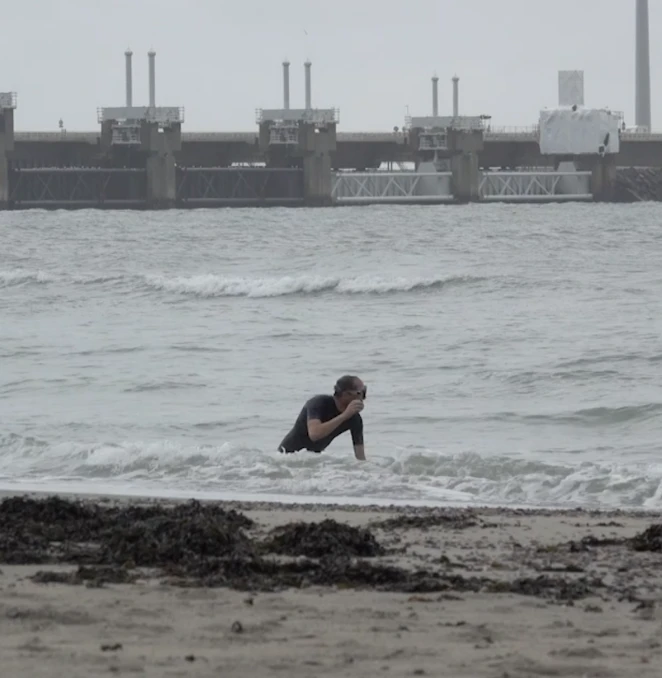
Theun Karelse
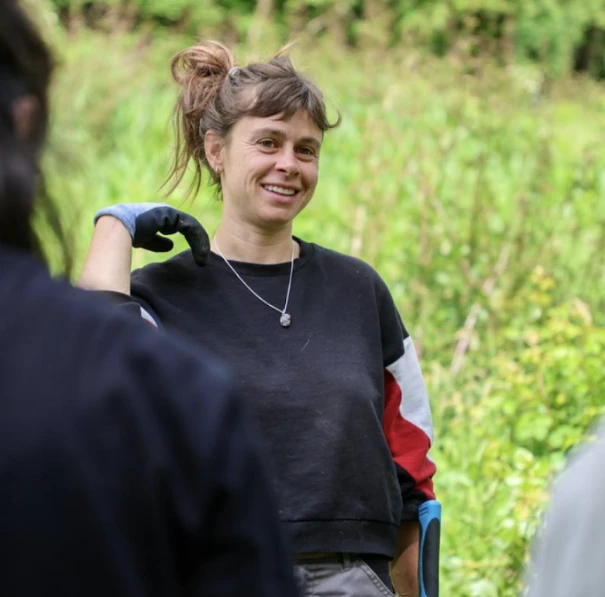
Céline Hough
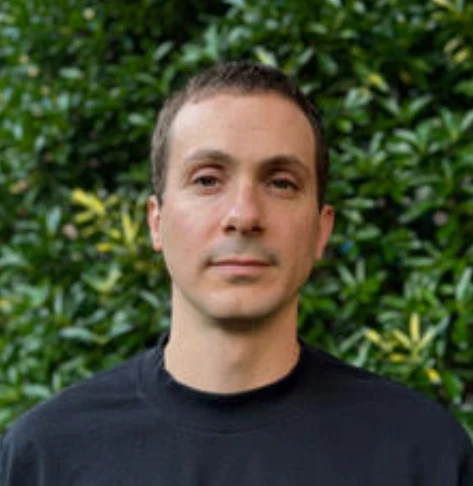
Alexander Damianos
Theun Karelse
Céline Hough
Alexander Damianos